What Is Happening with the Labor Reform in Colombia?
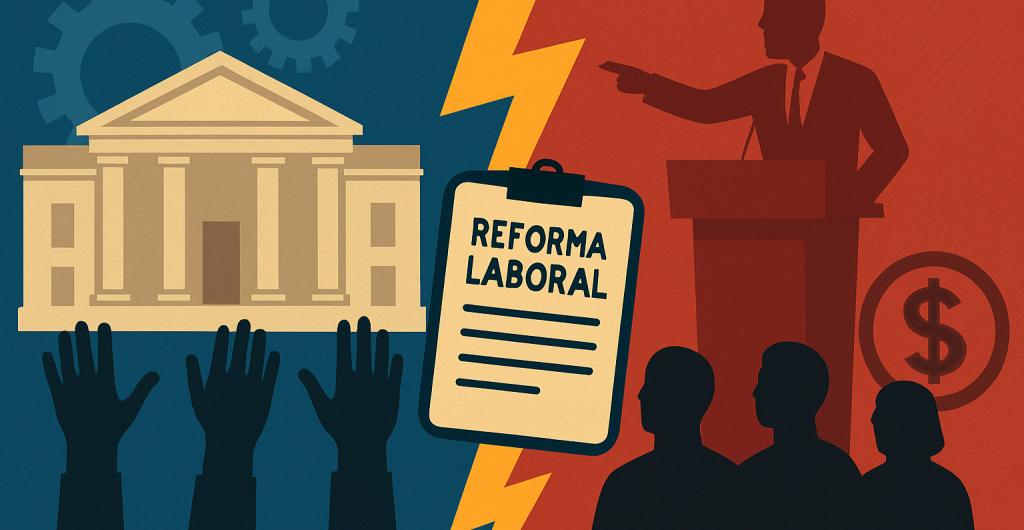
By: María Alejandra Almanza Núñez, Master's Candidate in Labor, Procedural, and Social Security Law, cassation specialist and legal advisor in labor law and pensions
Note: this article was published in June 2025 and describes the situation at that time. It may have changed since; it is kept as a historical reference.
In recent days, public opinion, businesses, and the legal sector in Colombia have been closely watching a development that will shape the future of labor relations in the country: the Labor Reform was approved by the Senate of the Republic. However, this does not mean it is already in force. In this article, I will explain in clear but rigorous terms what is happening with the reform, what effects it could produce, and what business owners, workers, and legal professionals need to keep in mind.
📌 What Did the Senate Approve?
On Tuesday, June 17, 2025, the Colombian Senate approved the Labor Reform bill with 57 votes in favor and 31 against. The bill incorporates several proposals put forward by the National Government, the most notable of which include:
- Night-shift surcharge starting at 7:00 p.m. (currently, it begins at 9:00 p.m.).
- 100% pay for work on Sundays and public holidays (currently set at 75%).
- Formal employment status for gig-economy and digital platform workers.
- Employment contracts for SENA (Colombia's national vocational training service) apprentices.
- Restrictions on labor outsourcing and independent contractor arrangements.
These measures are designed to strengthen the protection of workers' rights, promote job stability, and reduce informality in the labor market.
⏳ Is It Law Yet? No. One Critical Step Remains
Although the Senate has approved its version of the bill, the reform is not yet in force. Before it can become law, it must go through a reconciliation process between the texts approved by the House of Representatives (Cámara) and the Senate, meaning both chambers must agree on a single, unified final version.
📅 The deadline for completing that reconciliation is June 20, 2025. If agreement is not reached by that date, the bill could be shelved and a new legislative process would have to begin in the following congressional session.
🔄 What Happened to the Popular Referendum the President Had Announced?
President Petro had issued a decree to call a popular referendum (consulta popular) in the event that Congress failed to pass the reform. However, following the Senate's favorable vote, that decree was withdrawn, setting aside that participatory mechanism for the time being.
⚖️ Legal and Economic Implications
The reform introduces significant benefits for workers, but also presents challenges for employers:
- Increased labor costs: estimates range from a 6.8% to 35% rise, depending on the size and nature of the business.
- Adjustments to shifts and pay structures: companies will need to review work schedules, hours, and compensation schemes.
- Restructuring of hiring models: many businesses will need to reassess their use of independent contractor agreements, particularly where the work performed is core to their operations or of a permanent nature.
🔍 How Likely Is the Reform to Become Law?
If Congress manages to reconcile the two versions of the bill before June 20 and the President signs it into law, a new regulatory framework for labor relations in Colombia will take effect. If reconciliation fails, the reform dies, and the entire legislative process would have to start over.
Everything hinges on the political agreement reached between the Senate and the House in the coming days. This is a decisive moment.
✅ Recommendations from Consejuridico
💼 Business owners: preparation is key. We recommend reviewing your current contracts, analyzing costs, and beginning internal updating processes now.
👩⚖️ Lawyers and law students: this is the ideal time to study the regulatory changes, anticipate their practical implementation, and deepen your knowledge of both individual and collective labor law.
👷♀️ Workers: stay informed about your rights. If the reform becomes law, you will have stronger guarantees regarding pay, working hours, and job stability.
📲 At Consejuridico, we are ready to advise you through this period of transformation. Contact us if you need guidance on adapting your business or protecting your labor rights. Learn more at Jurídiconline.
#ReformaLaboral2025 #ConsejuridicoTeInforma #MaríaAlejandraAlmanza #DerechoLaboralColombia
El asistente jurídico digital de Jurídiconline analiza tu situación específica. La revisión inicial es gratuita.

