Democratic Transformation: Infocracy
By: Manuel Bautista, attorney, law professor and university lecturer, Master's in Law, specialist in Intellectual Property, Constitutional Law, and Administrative Law; focused on Economic Law, personal data protection, and business structuring
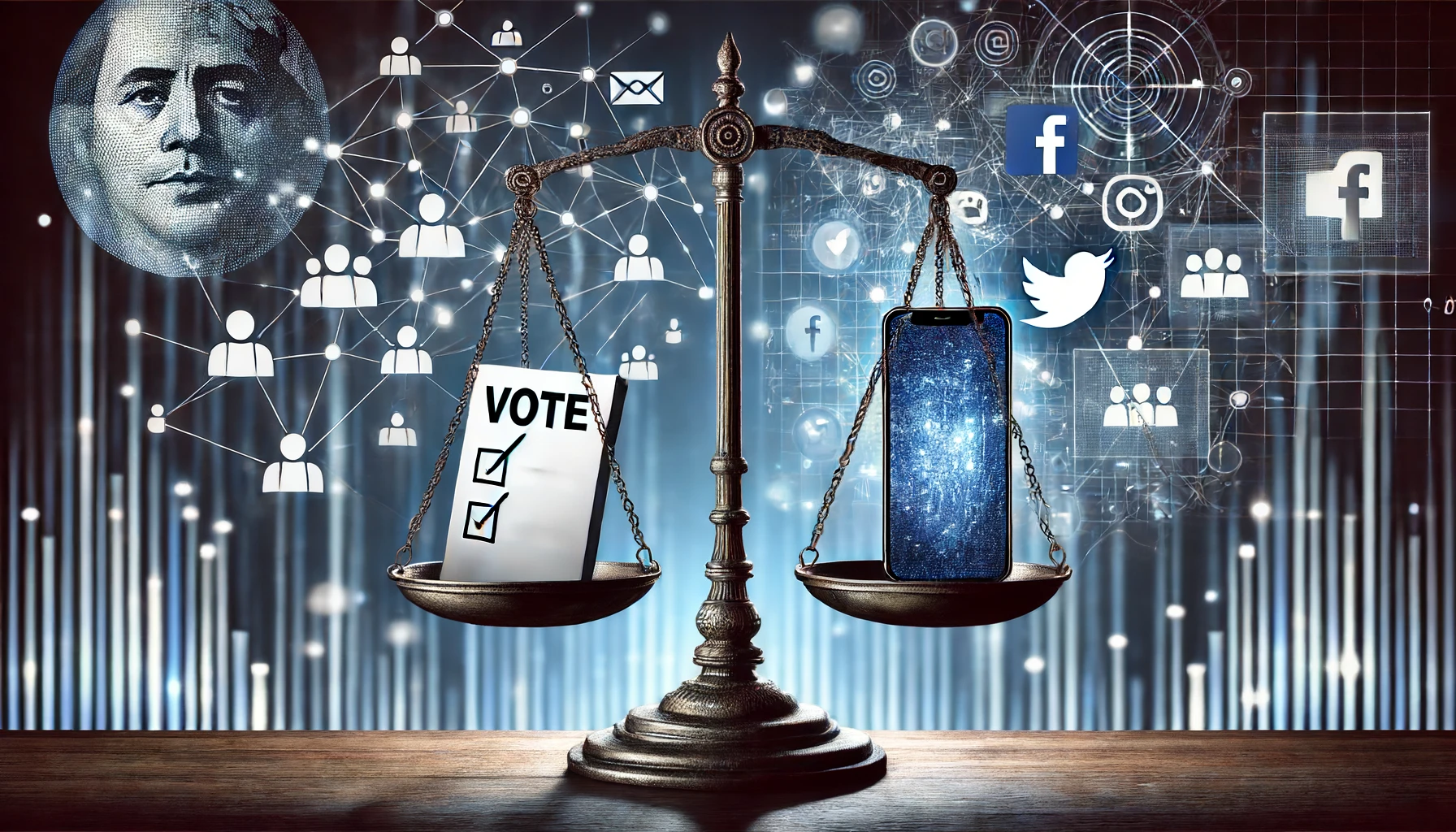
Over the past decade, the widespread adoption of social media and the constant presence of mobile devices in our daily lives have significantly transformed democratic processes. The Cambridge Analytica case, extensively documented in the press and in documentary films, illustrates how social media can influence democratic processes — suggesting a shift from government by the people (democracy) to government by data (infocracy).
Social Media and Data Processing
Infocracy becomes even more apparent when combined with the mass processing of data driven by artificial intelligence. Our data — particularly that generated through our interactions on digital platforms — is processed to build profiles of our tastes and preferences across various aspects of life. This information is extremely valuable from a marketing standpoint, giving rise to the concept of Political Marketing: the set of strategies used to make certain political parties, candidates, or movements appealing to voters.
Infocracy and the Democratic Process
Infocracy represents a shift in democratic debate and the exchange of ideas — away from substantive discourse and toward an approach that prioritizes data volumes, statistics, and social media engagement metrics. This shift explains the rise of new public figures such as influencers and content creators, whose efforts are centered on gaining followers and trending online.
Impact on Democracy
This trend, however, risks trivializing and impoverishing the democratic process. On social media, the goal is to generate opinion shocks, sacrificing substance for form. Developing nuanced, in-depth ideas does not carry the same impact as delivering a powerful slogan or a striking image. This dynamic, combined with the algorithmic bias that filters content on social media platforms, means users are only exposed to content they have already engaged with positively.
Polarization and Algorithms
The use of algorithms helps explain growing polarization — particularly among younger populations, who consume content without context. These individuals tend to believe that their social media feed reflects reality, without considering that this curated "reality" excludes other perspectives. This makes constructive debate increasingly difficult; instead, follower counts and likes are used as evidence of the validity of an argument.
The Risks of Infocracy
The greatest risk of infocracy is that, often without realizing it, we surrender our freedom by becoming data profiles that feed enormous databases. The data we voluntarily provide can be used to manipulate and commodify us, stripping away our humanity in the process.
At Consejuridico, we are committed to protecting your data and promoting a healthy democratic process. Our team of experts is available to help you navigate these challenges and ensure that your rights and freedoms are respected in the digital environment.
Do you have questions about the legal implications of Infocracy? Contact Dr. Bautista by clicking here
El asistente jurídico digital de Jurídiconline analiza tu situación específica. La revisión inicial es gratuita.

